Address
304 North Cardinal St.
Dorchester Center, MA 02124

Work Hours
Monday to Friday: 7AM - 7PM
Weekend: 10AM - 5PM

SONATA

Monitoring of nature infrastructure - Skill acquisition for Nature-based Solutions

SONATA Summer School

From Soil to Landscape: Integrating Biodiversity, Spatial Science and Policy for Sustainable Land Use

SONATA Summer School – From Soil to Landscape brings together soil science, biodiversity, spatial modeling, and policy to support sustainable land-use decisions. Using Vojvodina as a living laboratory, participants combine soil and microbiome data, habitat mapping, GIS tools, and stakeholder insights to co-create Nature-Based Solutions and spatial guidelines. The program links science, practice, and policy within the EU Soil Mission, biodiversity, and climate action context.

Learning Objectives and Expected Outcomes

After completing the Summer School, participants will be able to:

  1. Understand links between soil health, biodiversity, and landscape processes across scales.
  2. Apply soil sampling, eDNA/microbiome analysis, and spatial data in landscape assessments.
  3. Use GIS and spatial modeling tools to support land-use and soil-related decisions.
  4. Integrate social research and stakeholder perspectives into scientific workflows.
  5. Translate scientific evidence into policy-relevant outputs, including spatial guidelines and Nature-based Solutions.
  6. Critically assess the role of soil organic carbon, biodiversity, and drought resilience in climate mitigation and land management.

Participants will:

  • Gain hands-on experience with multidisciplinary datasets and tools (soil,
    biodiversity, spatial, socio-economic).
  • Develop integrated group outputs, linking soil health and biodiversity with
    landscape-scale planning.
  • Produce conceptual or prototype spatial guidelines (e.g. buffer zones,
    restoration areas, SOC-oriented scenarios).
  • Strengthen skills in co-creation and science–policy interaction, relevant for
    EU Soil Mission and Green Deal initiatives.
  • Build networks across disciplines and sectors, including academia, policy,
    and finance.

Call for Applications - ends April 30th

Date and Location

1st – 5th June, BioSense Institute, Novi Sad, Serbia

Format

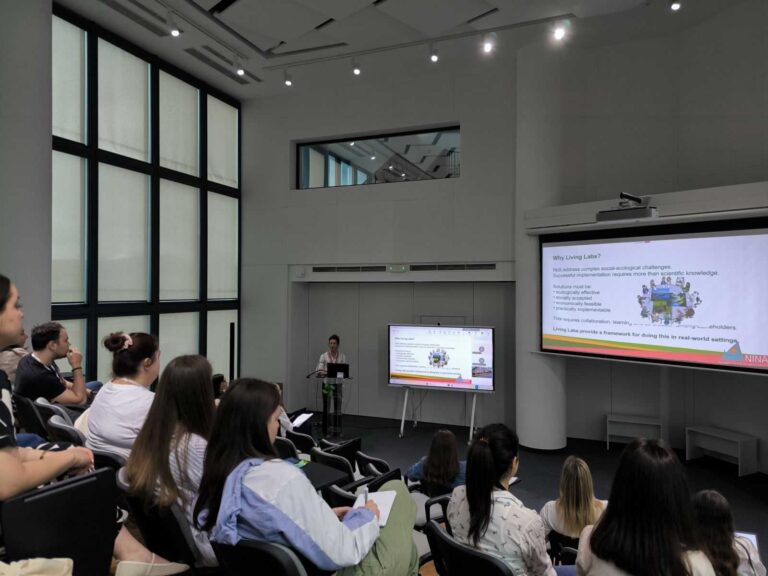
Lectures, hands-on practicals, group work, excursions, co-creation workshops, and round tables with scientists, policymakers, and financial actors. All activities will be held in English.

↓ Register here ↓

https://ec.europa.eu/eusurvey/runner/SONATA_Summer_School_2026

The SONATA Summer School is a publicly open event. However, participation in the hands-on workshops within the Summer School is limited and requires prior registration. These workshops include practical exercises designed for Master’s and PhD students from diverse backgrounds, as well as early-career researchers.

Agenda

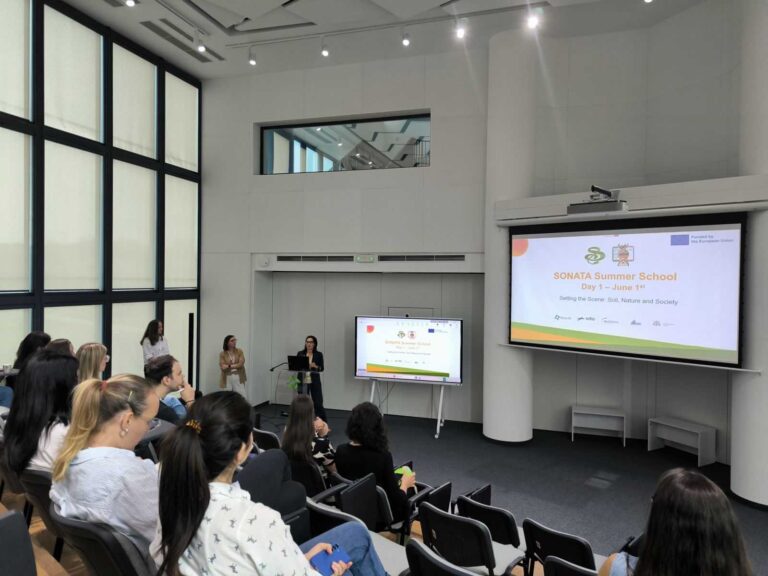
DAY 1 – Setting the Scene: Soil, Nature and Society

Welcome and registration

⋅ Introductory sessions: SONATA overview, NbS, Droughts, land use and SoC
⋅ Co-creation workshop on Social perspectives on land-use decision making
⋅ Lecture on Economic and financial perspectives and green finance

End of the day discussion

DAY 2 – From Data to Decisions: Linking Soil, Biodiversity and Spatial Tools

Morning lectures: Landscape and soil data foundations, soil microbial diversity, spatial indicators and decision support tool, environmental policy

Splitting into groups for practical work:

⋅ Group A – Soil Mapping & Landscape Modeling
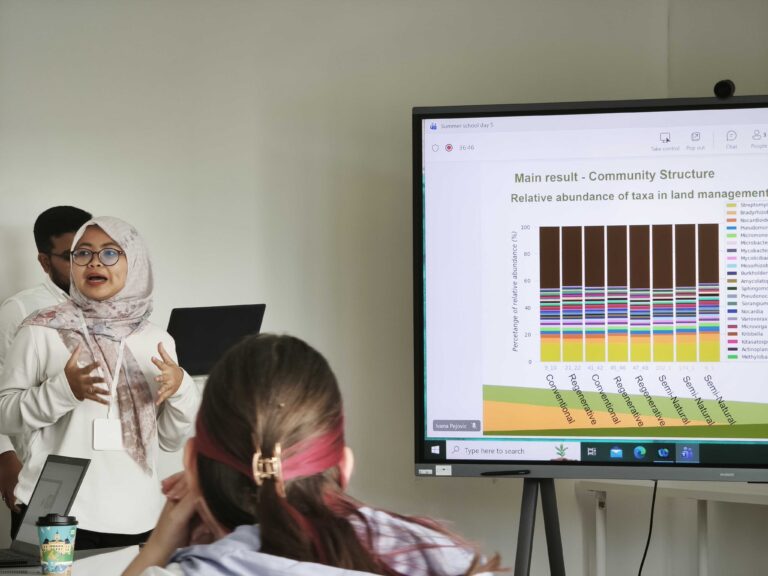
⋅ Group B – Soil Microbiome & Bioinformatics 

Plenary discussion: Socio-economic & policy aspects

DAY 3 – Science–Policy–Practice Interface

Invited speaker lectures

Afternoon discussion: green governance

Joint dinner

DAY 4 – Hands-on Integration and Analysis

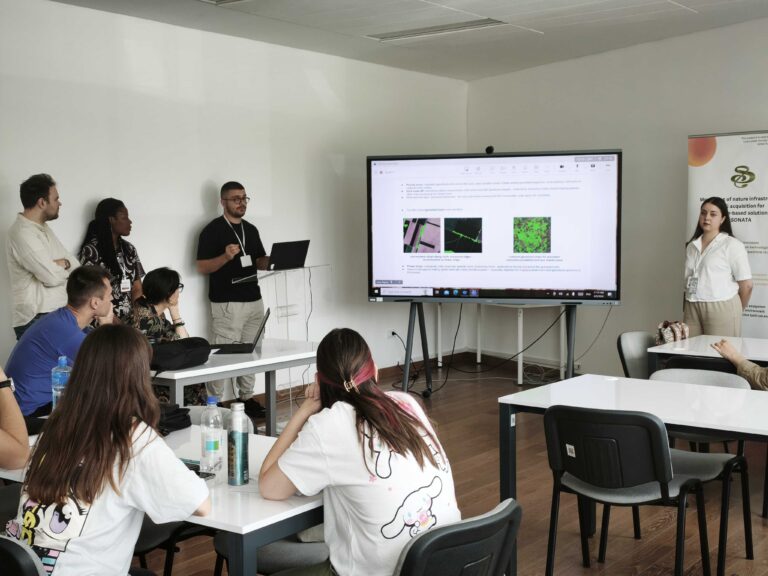
Hands-on practical exercises in designated groups

Joint discussion: Linking soil biodiversity, ecosystem functions & landscape planning

DAY 5 – Synthesis, Communication and Outlook

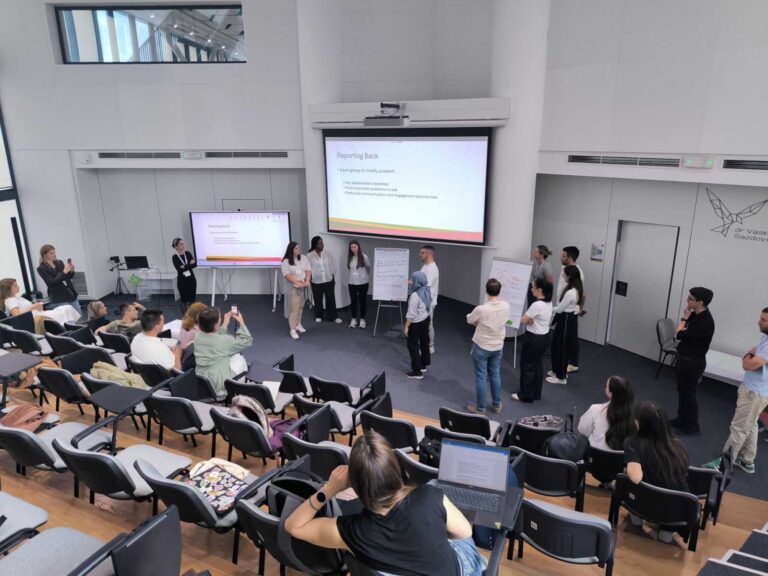
Presentations of group work

Round-table discussion: Implications for soil health & policy

Closing of the event

Who should apply?

The Summer School is open to Master’s and PhD students, early-career
researchers, and practitioners with an interest in soil, biodiversity, landscape
planning, or sustainability transitions.

We particularly welcome applicants from the following backgrounds:

  • Soil science, ecology, environmental sciences
  • Geography, GIS, spatial planning, remote sensing
  • Agriculture, forestry, land management
  • Biodiversity, conservation, agroecology
  • Socio-economic, policy, or sustainability studies
  • Data science applied to environmental systems

Interdisciplinary motivation is more important than a perfect disciplinary fit.

What will participants learn?

Participants will:

  • Work with soil, biodiversity (eDNA and microbiome), and spatial datasets
  • Gain hands-on experience in GIS, spatial modeling, and decision-support
    tools
  • Learn how stakeholder knowledge and social research inform land-use
  • Explore Nature-Based Solutions, soil organic carbon, drought resilience,
    and landscape optimization
    decisions
  • Understand how scientific evidence feeds into policy processes, carbon
    markets, and financial instruments.

Why apply?

  • Learn from leading European experts across disciplines.
  • Work on real case studies from Vojvodina as a living laboratory.
  • Build skills relevant to EU Soil Mission, biodiversity, and climate policies.
  • Network with researchers, policymakers, and financial actors.
  • Strengthen your profile for research, policy, and applied sustainability careers.

Tracks and Structure

Participants will choose one of two main practical tracks:

  • Group A – Soil Mapping and Landscape Modeling
    Soil data analysis, spatial modeling, SOC-related scenarios, and landscape-scale planning.
  • Group B – Soil Biodiversity and Bioinformatics
    Soil microbiome and eDNA analysis, biodiversity indicators, and links to soil
    ecosystem functions.

Joint sessions, discussions, and co-creation workshops will bring both tracks together.

*Summer school announcement poster created using Artificial Intelligence

This project is funded by the European Union under Horizon Europe (Project SONATA GA 101159546)