Address
304 North Cardinal St.
Dorchester Center, MA 02124

Work Hours
Monday to Friday: 7AM - 7PM
Weekend: 10AM - 5PM

SONATA

Monitoring of nature infrastructure - Skill acquisition for Nature-based Solutions

Living Lab Corner - Our Work

Background and Concept

Climate change is increasingly shaping landscapes and livelihoods in Vojvodina. More frequent and intense droughts threaten agricultural production, natural ecosystems, and soil moisture balance, with particularly severe impacts in vulnerable environments such as saline wetlands, arable land, and semi-natural grasslands.
Healthy ecosystems and biodiversity play a crucial role in strengthening landscape resilience to drought. Through ecosystem services such as water retention, microclimate regulation, and soil fertility, nature itself provides effective buffers against climate extremes. In this context, Nature-based Solutions (NbS) are gaining recognition as a key approach to climate adaptation, relying on the restoration of natural processes rather than purely technical interventions.
However, for NbS to be effective and locally relevant, scientific knowledge must be combined with the experience, needs, and perspectives of local communities. This is where the Living Lab (LL) concept comes in. Living Labs offer a participatory framework for co-creating, testing, evaluating, and scaling NbS in real-world conditions, bringing together researchers, decision-makers, practitioners, and citizens.

Context and Challenges

In Serbia, climate change is already manifesting through longer dry periods, higher temperatures, and increasingly irregular precipitation patterns. These trends are especially pronounced in Northern Bačka, and particularly in the Kanjiža region, where agriculture, water availability, and biodiversity are tightly interconnected.
A distinctive feature of this area is the presence of temporary saline wetlands (soda pans)—a unique hydro-ecosystem sustained by complex interactions between groundwater, surface water, soil properties, and vegetation. While ecologically valuable, these systems are highly sensitive to climate extremes such as prolonged droughts and heatwaves, which are increasingly becoming the new normal.
These changes highlight an urgent need for locally adapted water and land management solutions that reflect the region’s specific ecological and socio-economic characteristics.

The Jaraši Living Lab Initiative

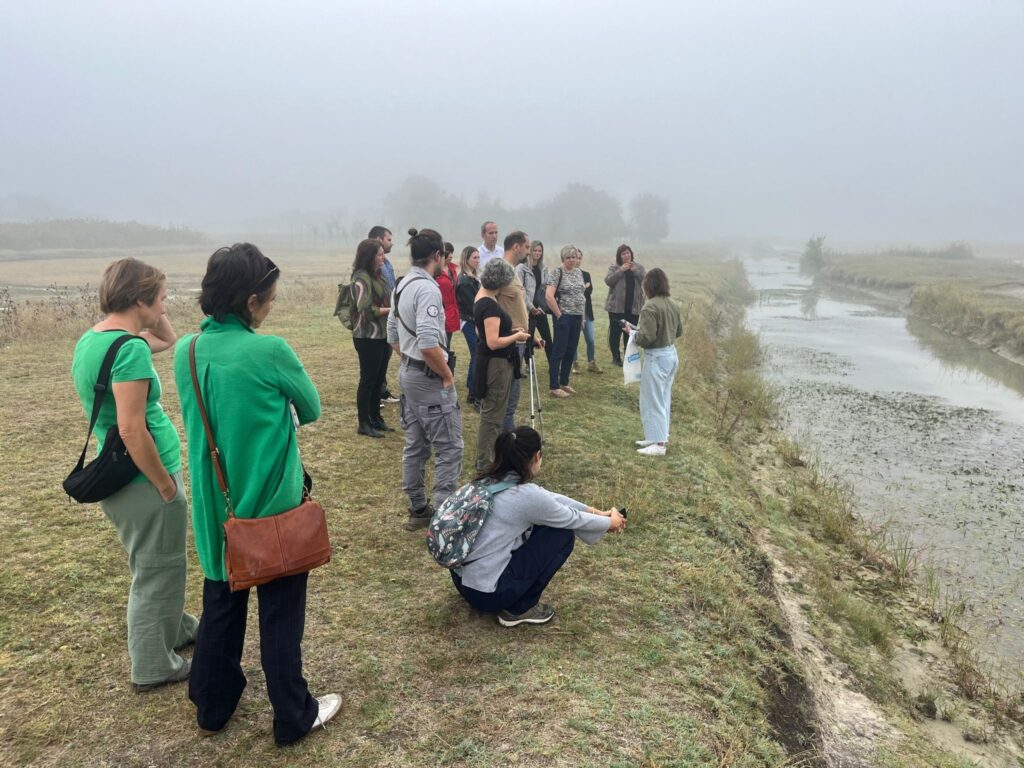
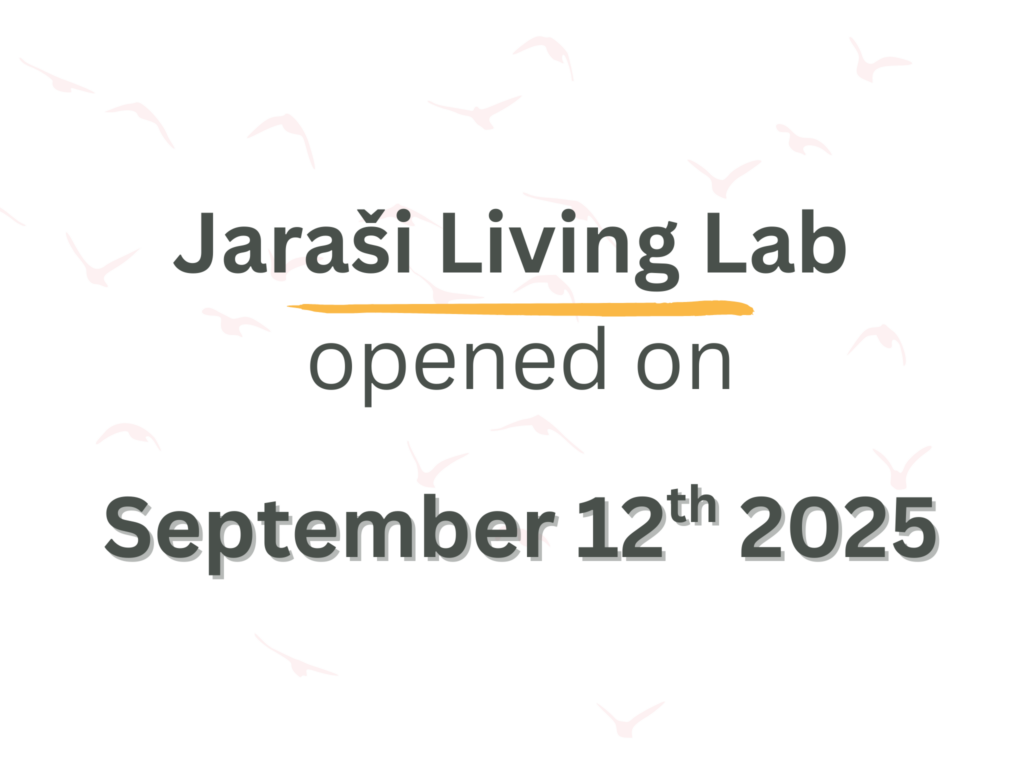
In response to these challenges, the “Together for Water and Nature – Jaraši Living Lab” was launched. The initiative aims to develop, test, and scale Nature-based Solutions for drought mitigation and biodiversity conservation through a participatory Living Lab approach in Northern Bačka.
The Living Lab brings together a broad range of actors, including:
  • Local government
  • Public Enterprise Palić–Ludaš
  • Local citizens’ associations and farmers
  • Researchers and other relevant stakeholders
By working collaboratively across sectors and governance levels, the Living Lab creates a shared space for learning, experimentation, and decision-making. The goal is to co-create solutions that are ecologically effective, socially accepted, and realistically implementable, strengthening both ecosystem resilience and community capacity to adapt to climate change.

Objectives

Overall Objective
To explore and test the potential of Nature-based Solutions to mitigate drought impacts and preserve biodiversity through a participatory Living Lab process in the Kanjiža region.
Specific Objectives
  • Identify and evaluate NbS practices that enhance water retention, soil moisture, and habitat conservation
  • Understand local perceptions, knowledge, and practices related to drought, soil, and nature
  • Establish a Living Lab for co-creating, implementing, and monitoring adaptive solutions
  • Measure the impacts of NbS on soil moisture, biodiversity, and agricultural yields at pilot sites
  • Integrate socio-economic and biophysical data to support land-use recommendations and policy development


A Multi-Scale Living Lab Approach

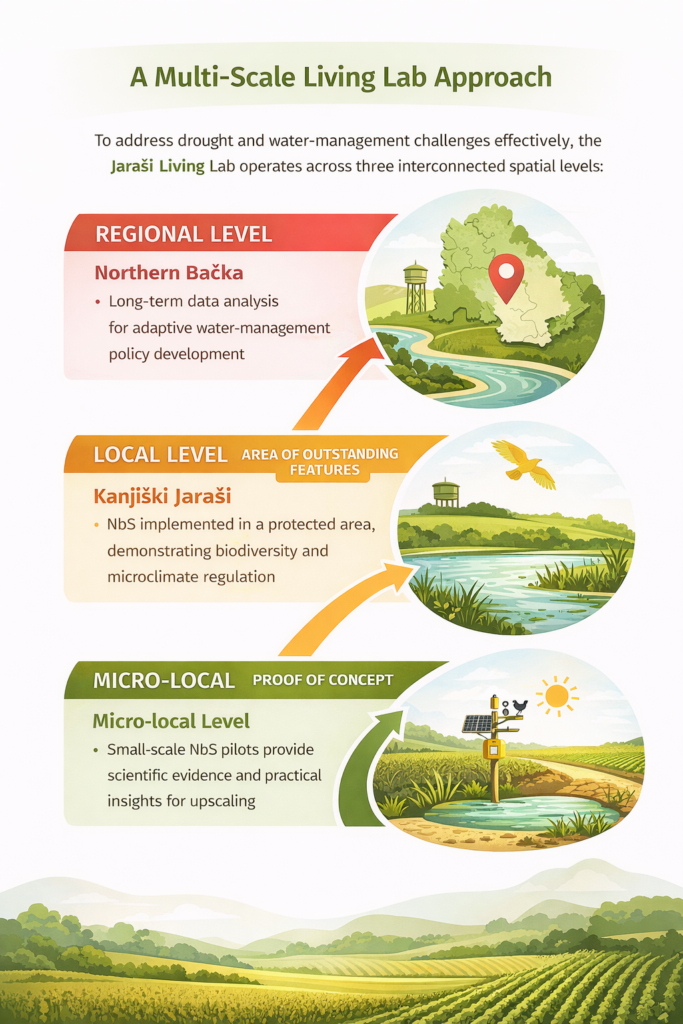
To address drought and water-management challenges effectively, the Jaraši Living Lab operates across three interconnected spatial levels:
Micro-local Level – Proof of Concept
Small-scale NbS interventions are tested to understand hydrological behavior, soil moisture dynamics, vegetation responses, and system connectivity. These pilots provide scientific evidence and practical insights for upscaling.
Local Level – Area of Outstanding Features “Kanjiški Jaraši”
NbS are implemented and demonstrated within a protected area, restoring ecosystem functions such as biodiversity, soil health, and microclimate regulation. The area serves as a field laboratory and learning site for replication elsewhere.
Regional Level – Northern Bačka
Long-term climate and water-balance data are analyzed to inform adaptive water-management strategies and policy development under future climate scenarios, ensuring that local learning feeds into regional planning.

Co-Creation, Learning, and Decision-Making

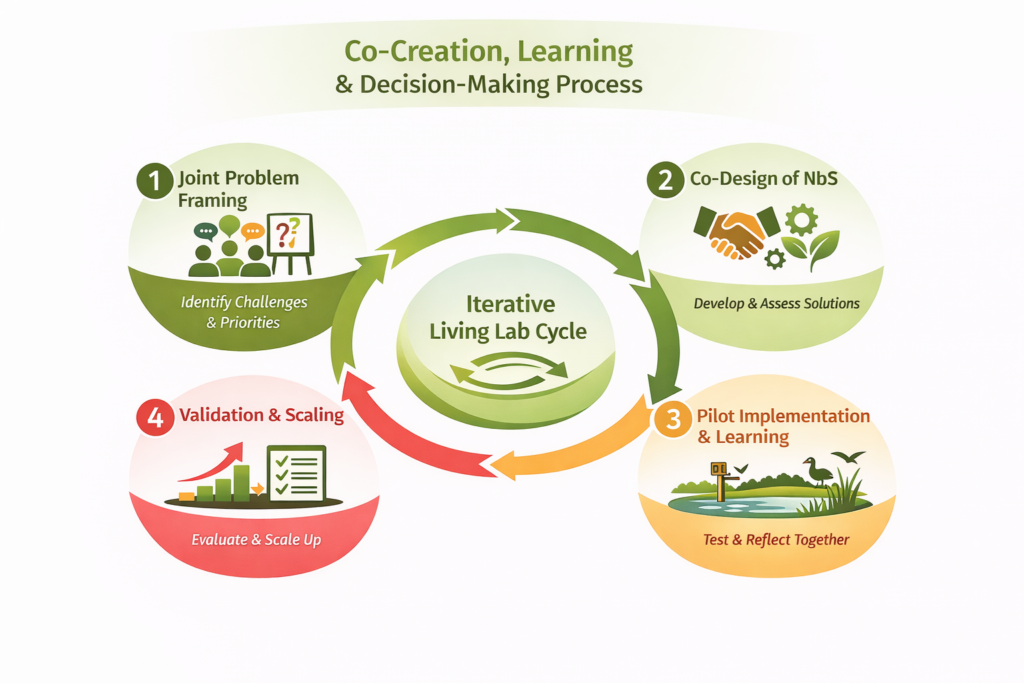
The Living Lab follows an iterative, four-cycle process:
  1. Joint problem framing – stakeholders identify key challenges and priorities
  2. Co-design of NbS – solutions are developed, assessed, and negotiated collectively
  3. Pilot implementation and joint learning – proof-of-concept testing and reflection
  4. Validation and scaling – evaluation of effectiveness and readiness for wider application
Throughout the process, insights from experimentation and stakeholder dialogue are translated into decision-oriented narratives, ensuring that lessons learned locally are transferable and relevant for policy, training, and long-term planning.
 

Towards Long-Term Drought Resilience

By combining science, local knowledge, and participatory governance, the Jaraši Living Lab demonstrates how Nature-based Solutions can support sustainable water and land management, biodiversity conservation, and climate resilience. The Living Lab is not only a testing ground for solutions, but also a platform for building trust, shared understanding, and long-term capacity—laying the foundation for resilient landscapes and communities in Northern Bačka and beyond.

*Schematics created using Artificial Intelligence

This project is funded by the European Union under Horizon Europe (Project SONATA GA 101159546)